

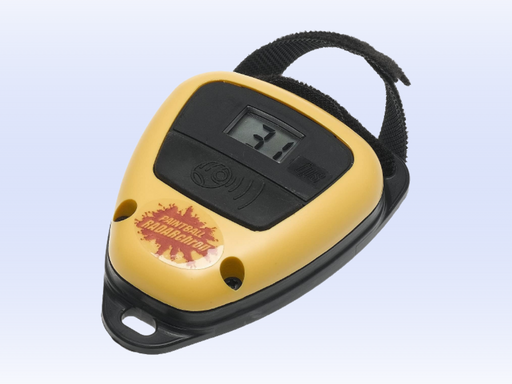
A paintball chronograph measures the velocity of each paintball as it leaves your barrel, in feet per second (FPS). Most fields cap markers at 280 300 FPS, and if your marker creeps over during a day of play, you’ll get pulled off the field until you tune the regulator down. Owning a chrono means you check yourself before the ref does.
I’ve used all three picks below at real fields over the last few seasons. Here’s what I reach for.
| Pick | Best for | Price | Accuracy |
|---|---|---|---|
| HK Army Sports Sensors | Most paintball players | ~$150 | ±2% |
| ACETECH AC5000 | Budget, airsoft+paintball crossover | ~$53 | ±1% |
| Competition Electronics ProChrono DLX | Players who also shoot rifles | ~$138 | ±0.5% |
Top 3 Picks
HK Army Sports Sensors
Best overall — the only handheld built specifically for paintball
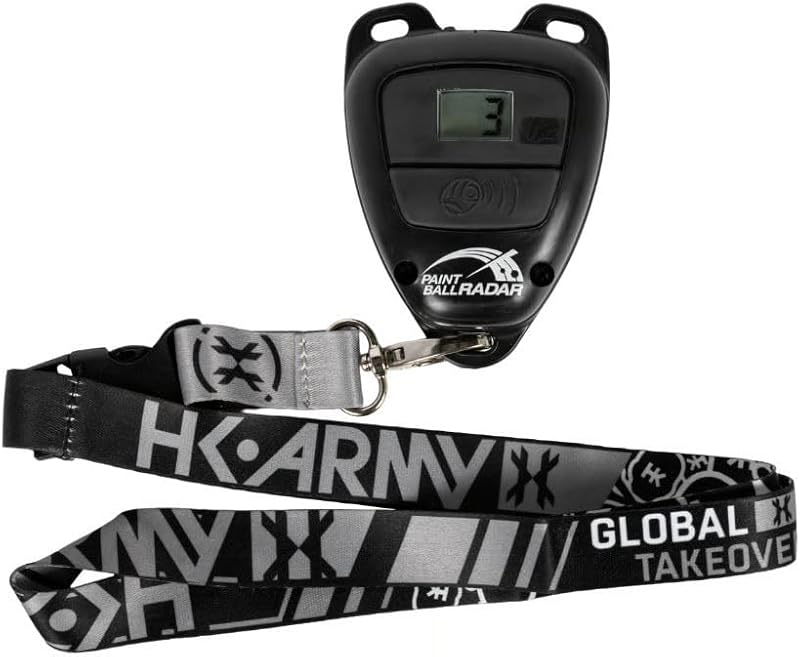
HK Army Sports Sensors Paintball Chronograph
This is the one I recommend to anyone who plays more than once a month. It’s a small radar unit you hold behind the marker, pull the trigger, and read the FPS off the LCD. No sky-screens to set up, no barrel mount, no apps. Runs on a single 9V battery and clips to your belt.
Accuracy is rated within 2% across the 150 450 FPS paintball range. I’ve cross-checked mine against a field’s Chrony and readings have never been more than 5 FPS apart. The lanyard and rubberized case mean it’ll survive being dropped on a staging table, which mine has been, many times.
The only real weakness is the small LCD — hard to read in direct sunlight without angling it. I keep mine under my jersey when I’m not using it.
Pros:
- Purpose-built for paintball, sold under the HK Army / Sports Sensors brand
- ±2% accuracy at 150 450 FPS
- Fits in a pod pack or jersey pocket
- 9V battery lasts a full season
Cons:
- LCD washes out in bright sunlight
- Reads one shot at a time (no rate-of-fire capture)
ACETECH AC5000
Best budget pick — tube style unit under $60
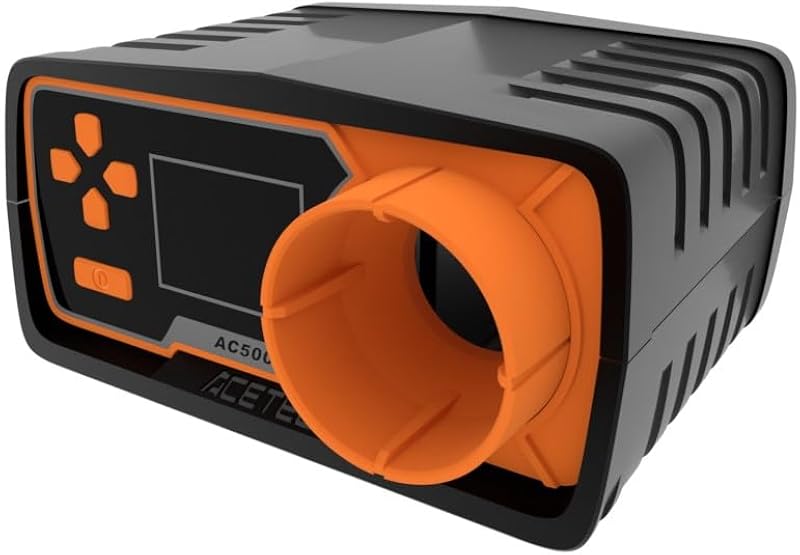
ACETECH AC5000 Airsoft Gun Speed Tester BBS Chronograph
Marketed for airsoft, but .68 caliber paintballs clear the barrel opening easily and it reads accurately in my testing. For the price — usually around $53 — this is the cheapest way to chrono reliably at home. You screw your barrel into one end, fire into the other, and the LCD shows FPS.
ACETECH claims ±1% accuracy and the unit auto-calibrates on each shot. It also reads joules and rate of fire if you care, though for paintball you really only need FPS.
The catch: because it’s tube style, you can’t quickly chrono a teammate’s marker without detaching their barrel. The HK Army unit is faster for pre-game spot checks. If you’re setting up a home test bench, the AC5000 is the better tool.
Pros:
- ±1% accuracy auto-calibrated per shot
- Reads FPS, joules, and rate of fire
- Under $60 — roughly a third the price of purpose-built paintball units
Cons:
- Requires you to thread your barrel into the unit (awkward at a field)
- Marketed as airsoft (warranty on paintball use is unclear)
Competition Electronics ProChrono DLX
Best for players who also shoot rifles or own an airgun
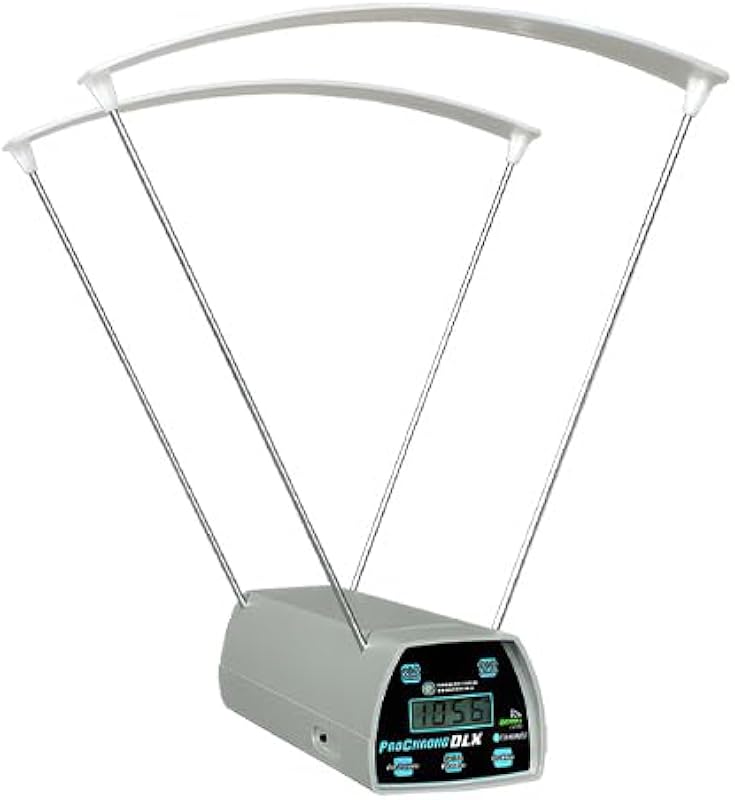
Competition Electronics ProChrono DLX
This is the chrono I use when I want to double-check the HK unit. It’s a sky-screen model — two photodetectors with a U-shaped housing that you set down on a bench, then fire across. The DLX adds Bluetooth to the classic ProChrono, so readings stream to an iOS or Android app and log to CSV.
Accuracy is ±0.5%, which is tighter than you need for paintball but nice to have. Because it’s not a tube, any barrel length works, and it reads velocities from 20 7000 FPS, so it also covers .22 rifles, airguns, and slingshots if you have those. It’s a kit unit — not as portable as the HK, but far more versatile.
I don’t take the DLX to the field. It lives on my workbench where I tune regulators.
Pros:
- ±0.5% accuracy — tightest of the three
- Bluetooth + app for shot logging and stats
- Works for any projectile sport (paintball, airsoft, rifle, archery)
Cons:
- Not field-portable, needs a flat setup surface
- Overkill purely for paintball velocity checks
How to Chrono Your Marker
- Charge or fill your tank to working pressure (3000 or 4500 PSI depending on setup).
- Load the hopper with the same paint you’ll play with — paint weight and fill level affect velocity.
- Fire 5 6 shots through the chronograph. Watch the peak reading, not the first one.
- Tune your regulator down until the highest shot reads 270 275 FPS. That gives you ~10 FPS of headroom under a 280 cap.
- Re-chrono between games. Velocity drifts as your tank pressure drops and paint swells in the sun.
Buyer’s Guide
Accuracy: Look for ±2% or tighter. All three picks on this list qualify. Anything looser risks reading you under the limit when you’re actually over, which gets you pulled off the field.
Portability: Want to chrono at the field, buy a handheld (HK Army unit). Building a home tuning setup, a sky-screen (ProChrono DLX) or tube unit (AC5000) is fine.
Velocity range: 150–450 FPS is plenty. Don’t pay extra for 5000+ FPS rifle chronographs unless you also shoot long guns.
Power source: 9V batteries (HK Army) or AA (ACETECH, ProChrono) are easy to find at any hardware store. Avoid units that require proprietary rechargeables.
Price: $50–$150 gets you everything a paintball player actually needs. Above that, you’re paying for features aimed at benchrest shooters.
Related Reading
- HPA vs CO2 tanks — your tank type is the biggest factor in velocity consistency
- Paintball marker maintenance — a drifting regulator is the usual reason chrono readings creep
- Paintball safety rules — why fields enforce 280 FPS caps
Bottom Line
Get the HK Army Sports Sensors Paintball Chronograph if you only buy one. It’s the most convenient tool for the actual job paintball players do — chroning between games at the field. If you’re on a budget or you also shoot airsoft, the ACETECH AC5000 does the same job at home for a third the price. And if you shoot rifles too, the ProChrono DLX pays for itself the first time you tune a regulator and want hard data instead of a handful of peak reads.
Chrono before every session. It’s the cheapest way to avoid a walk of shame to the staging area.